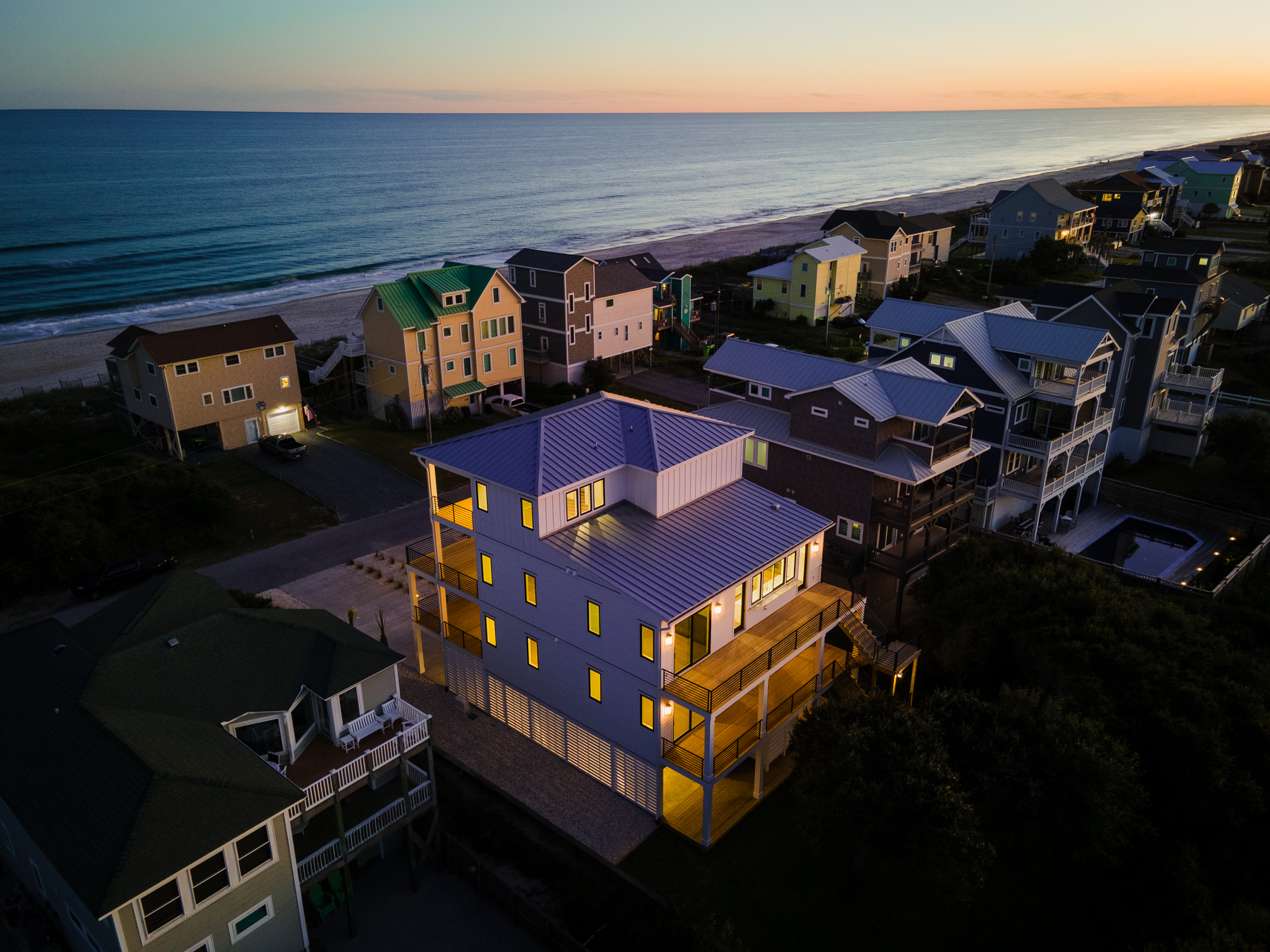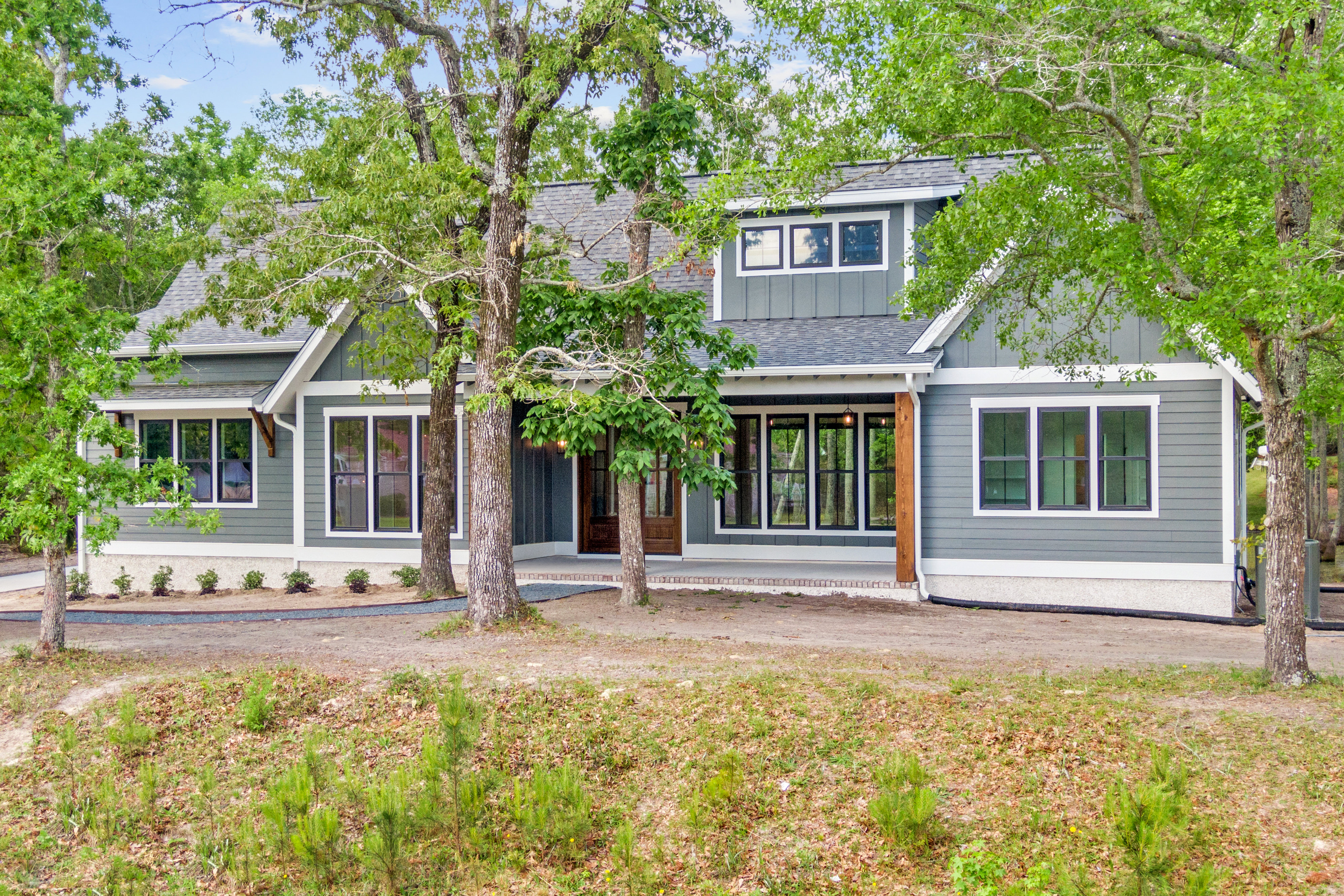
Building a home along the coast of North Carolina offers something special. The proximity to water, the changing light, the open skies, and the relaxed rhythm of coastal living create an environment many homeowners dream about. But coastal beauty also comes with environmental realities that place greater demands on a home than most inland locations.
Salt-laden air, persistent humidity, wind exposure, and seasonal storms create conditions that constantly test the durability of a structure. Over time, materials expand and contract, fasteners corrode, moisture finds its way into small gaps, and poorly planned assemblies begin to show their weaknesses.
For this reason, long-term durability in coastal homes is not determined by visible finishes alone. It is shaped by decisions that happen much earlier in the process, often before a homeowner ever sees the first framing wall go up.
At Longshore Custom Homes, durability is not treated as a feature. It is the result of disciplined planning, careful material selection, and construction methods specifically suited for coastal environments. When those elements work together, the result is a home that continues to perform quietly and reliably for decades.
Coastal Conditions Demand a Different Level of Discipline
The coastal climate of southeastern North Carolina introduces environmental pressures that are rarely encountered inland. These factors influence nearly every part of a home’s construction.
Salt carried through the air accelerates corrosion in metals that might perform perfectly well elsewhere. Fasteners, connectors, and exposed hardware must be chosen carefully to prevent premature deterioration.
Humidity levels remain high for much of the year. Without proper ventilation and moisture management, enclosed wall assemblies can accumulate moisture that gradually affects insulation, framing, and finishes.
Wind exposure is another important consideration. Coastal building codes require structural systems designed to resist uplift forces and lateral pressure during storm events. Proper engineering and correct installation of structural connectors are essential to maintaining the integrity of the home.
These environmental factors are not problems to be solved once construction begins. They must be anticipated and addressed from the earliest design stages.
Practical Considerations When Planning a Coastal Home
Experienced coastal builders evaluate several factors long before construction begins. Some of the most important considerations include:
• Wind exposure on the lot – Open waterfront lots experience stronger wind loads than properties sheltered by trees or neighboring structures. This can influence framing strategy, window selection, and roof design.
• Orientation of the home – Sun exposure affects indoor comfort, energy performance, and how exterior materials age over time.
• Drainage patterns on the property – Proper grading ensures water flows away from the foundation rather than collecting near structural elements.
• Proximity to marshland or open water – Moisture levels and soil composition often vary significantly near wetlands and waterways.
• Elevation requirements – Homes located in FEMA flood zones must meet specific elevation standards that influence foundation design and structural layout.
These early evaluations help ensure the home is designed to respond to its environment rather than working against it.
The Foundation Sets the Standard for the Entire Structure
A durable coastal home begins below the finished floor. Foundation design must account for both environmental exposure and the unique conditions often found in coastal soils.
Near marshland, waterways, and barrier islands, soil composition can vary significantly from one lot to the next. Some areas contain sand with shifting characteristics, while others have higher organic content that influences stability and drainage.
Before construction begins, proper evaluation of soil conditions helps determine the most appropriate foundation strategy. Elevation requirements may also influence the design, particularly in FEMA flood zones where homes must meet strict height requirements relative to base flood elevation.
In many coastal homes, elevated foundations allow the living space to remain above potential flood levels while also promoting airflow beneath the structure. This airflow can help reduce moisture accumulation and improve the long-term performance of structural materials.
A well-designed foundation does more than support the home structurally. It establishes the conditions that allow every other part of the building to perform properly.
How Coastal Conditions Affect Home Construction
Coastal Condition
How It Affects a Home
Construction Considerations
Salt-laden air
Salt particles accelerate corrosion in metals and exterior hardware over time
Use corrosion-resistant fasteners, stainless connectors, and durable exterior hardware designed for marine environments
Persistent humidity
High humidity levels increase the risk of moisture accumulation inside wall assemblies and attic spaces
Proper ventilation systems, air sealing, and moisture management strategies throughout the building envelope
Wind exposure
Coastal winds create uplift pressure on roofing systems and lateral pressure on walls
Reinforced framing connections, hurricane ties, engineered roof assemblies, and proper fastening schedules
Heavy rain and storms
Wind-driven rain can push water into small openings around windows, doors, and roof transitions
Advanced flashing systems, weather barriers, and careful detailing at every exterior transition point
Flood exposure in certain areas
Flood zones may require elevated foundations and additional structural planning
Foundation elevation strategies, pier systems, and structural design aligned with FEMA flood regulations
Structural Systems Must Be Engineered for Coastal Forces
One of the defining characteristics of coastal construction is the level of structural reinforcement required to resist wind and storm-related forces.
While a finished home may appear light and open, the structural system beneath the surfaces is designed with significant discipline. Framing layouts, shear walls, roof tie-down systems, and engineered connectors all play a role in helping the structure resist uplift and lateral movement.
Metal connectors and hurricane ties secure framing members together so that loads are distributed throughout the structural system rather than concentrated at individual points.
Roof assemblies must be carefully constructed to prevent wind from lifting roofing materials or compromising the integrity of the roof deck. Proper fastening schedules and underlayment installation help create a roof system that remains secure even during severe weather.
These elements are rarely visible once construction is complete, yet they represent some of the most important contributors to long-term durability.
Moisture Management Is One of the Most Critical Factors
Moisture is one of the most persistent challenges in coastal environments. Even on clear days, humidity levels can remain high enough to affect materials if moisture is allowed to accumulate within the structure.
For this reason, effective moisture management is built into the entire building envelope.
Exterior wall assemblies are designed to shed water efficiently while allowing small amounts of trapped moisture to escape. Proper flashing, weather barriers, and drainage planes ensure that water does not remain trapped behind siding or cladding materials.
Ventilation within attic spaces also plays a crucial role in regulating temperature and moisture levels. Balanced ventilation systems help maintain airflow that prevents condensation from forming inside roof assemblies.
Windows and doors must be carefully installed and sealed to prevent water intrusion during wind-driven rain events. Attention to detail at these transition points often determines how well a home performs over time.
When moisture is controlled effectively, materials remain stable, finishes last longer, and the home maintains a healthier interior environment.
Signs of Strong Moisture Management in Coastal Homes
When a home is designed and built with coastal moisture conditions in mind, several construction practices are typically present:
• Continuous weather barriers installed behind exterior cladding to prevent water intrusion
• Carefully installed flashing systems around windows, doors, and roof penetrations
• Ventilated attic assemblies that allow warm, humid air to escape
• Drainage planes within wall systems that direct water away from structural framing
• Sealed transitions between building materials to prevent wind-driven rain from entering the envelope
These measures may never be visible once construction is complete, but they play a critical role in protecting the structure from long-term moisture damage.
Materials Must Be Chosen With Coastal Exposure in Mind
Material selection is another area where coastal construction requires careful consideration. Products that perform well inland may not hold up under constant exposure to salt air and humidity.
Exterior materials must resist corrosion, moisture absorption, and ultraviolet exposure. Fasteners, brackets, and structural connectors are often specified in corrosion-resistant metals designed to perform in marine environments.
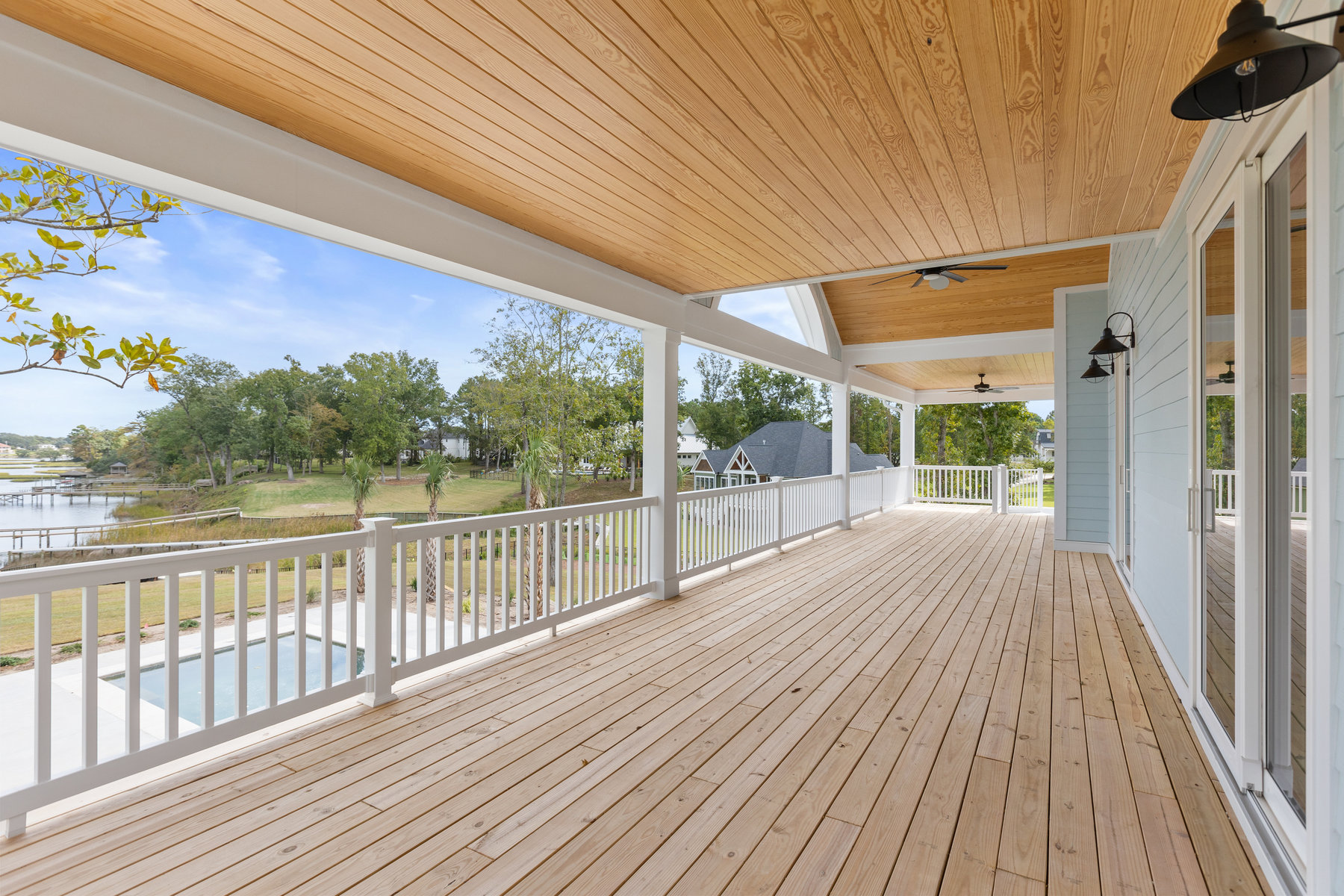
Decking materials, exterior trim, and rail systems must also be chosen with durability in mind. Components exposed to direct sunlight and salt air should maintain their structural integrity and appearance without excessive maintenance.
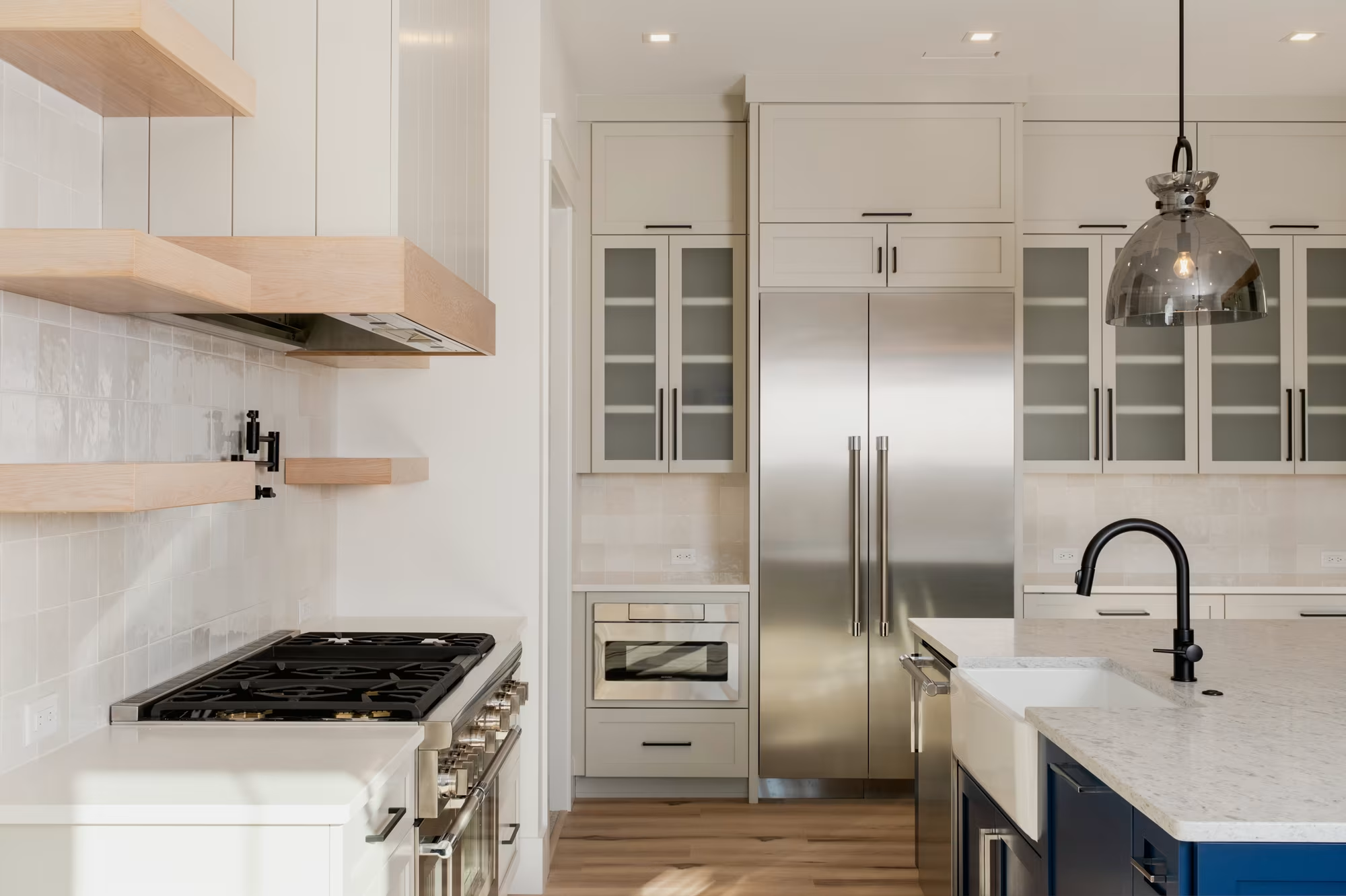
Inside the home, materials must also account for humidity levels. Proper ventilation and climate control help protect cabinetry, flooring, and interior finishes from seasonal expansion and contraction.
When materials are chosen thoughtfully, they contribute to a home that remains visually beautiful while also performing reliably for many years.
Common Coastal Material Choices and Why They Matter
Building Component
Coastal Performance Challenge
Preferred Material Considerations
Exterior fasteners
Corrosion from salt exposure
Stainless steel or marine-grade coated fasteners
Structural connectors
Long-term structural integrity under humidity and salt air
Hot-dip galvanized or stainless steel connectors
Exterior siding
Continuous sun exposure and moisture
Fiber cement siding, engineered wood products, or durable composite materials
Decking and outdoor structures
Constant weather exposure and salt air
Composite decking, treated lumber rated for coastal environments, corrosion-resistant fasteners
Windows and exterior doors
Wind-driven rain and humidity
Impact-rated windows and doors with advanced sealing and flashing systems
Roofing materials
High wind and UV exposure
Architectural shingles or metal roofing installed with proper coastal fastening standards
Roofing Systems Play a Major Role in Long-Term Performance
The roof of a coastal home experiences some of the most demanding conditions on the property. Sun exposure, wind pressure, and driving rain all place stress on the roofing system.
Durability begins with proper roof design. Roof pitches, overhangs, and drainage paths are carefully considered to ensure that water moves away from the structure efficiently.
Underlayment systems provide an additional layer of protection beneath roofing materials. These barriers help prevent moisture intrusion if wind or debris compromises the outer roofing surface.
Proper fastening of roofing materials is equally important. Wind uplift forces during storms can test the integrity of the roof system, making correct installation essential for long-term performance.
A well-built roof protects every component beneath it. When designed and installed correctly, it contributes significantly to the durability of the entire home.
Coastal Building Tip
When evaluating a roof system for a coastal home, it is important to look beyond the visible roofing material. Long-term durability depends on several underlying components working together:
• Proper roof deck fastening patterns designed for high-wind regions
• High-performance underlayment systems that provide a secondary moisture barrier
• Adequate roof ventilation to reduce heat and humidity buildup
• Overhang design that protects walls and windows from driving rain
A well-designed roof assembly acts as the home’s first line of defense against coastal weather.
Exterior Detailing Helps Protect the Structure
Durability in coastal homes is often determined by small details that guide how water and wind interact with the building.
Roof overhangs help shield walls and windows from heavy rainfall. Properly designed flashing directs water away from vulnerable areas where different materials meet.
Trim elements and cladding transitions must be carefully executed to ensure that water cannot collect in hidden pockets where damage might occur over time.
Deck connections and exterior structural elements must also be detailed to prevent moisture from penetrating structural framing. Even minor improvements in detailing can significantly increase the life expectancy of exterior components.
These elements are rarely noticed by homeowners after construction is complete, but they play a major role in protecting the home from long-term environmental exposure.
Interior Comfort Is Also Part of Durability
Durability is not limited to the structure itself. A well-built coastal home must also maintain interior comfort throughout changing seasons.
Proper insulation, air sealing, and ventilation systems work together to stabilize indoor temperature and humidity levels. When these systems function properly, the home feels comfortable year-round and mechanical systems operate more efficiently.
Balanced airflow prevents moisture buildup inside the home, protecting both structural materials and interior finishes.
In this way, durability and livability are closely connected. A home that manages environmental conditions effectively tends to age more gracefully and require fewer repairs over time.
Durability Comes From Experience and Attention to Detail
In coastal construction, long-term performance rarely comes from one single decision. It is the result of many small choices made throughout the design and building process.
Foundation design, structural engineering, moisture control strategies, material selection, and precise construction practices all contribute to the overall strength of the home.
At Longshore Custom Homes, these decisions are guided by experience working along the Carolina coast. Every project provides insight into how materials behave over time, how environmental forces interact with structures, and how thoughtful design can improve durability.
When a home is built with this level of care, the result is not simply a structure that looks beautiful on the day it is completed. It is a home that continues to perform quietly and reliably as the years pass.
Longshore Perspective
Homes built along the Carolina coast require a level of planning and construction discipline that goes beyond typical residential projects. Experience working in coastal environments allows builders to anticipate how materials will behave over time and how environmental forces will interact with the structure. These insights shape decisions that may never be visible but make a significant difference in how well a home performs decades after it is completed.
Building for the Long Term Along the Carolina Coast
Coastal homes must do more than provide beautiful views. They must withstand a demanding environment while continuing to provide comfort and security for the families who live in them.
True durability is not created by chance. It is achieved through careful planning, disciplined construction, and a deep understanding of coastal building conditions.
For homeowners building along the southeastern North Carolina coast, these considerations shape every stage of the process. When design, engineering, and craftsmanship work together, the result is a home that feels as strong and dependable as it does welcoming.
Along the Carolina coast, durability is not simply about resisting the elements. It is about building homes that remain confident, comfortable, and resilient for decades to come.
Key Takeaway
Building a durable home along the North Carolina coast requires far more than attractive finishes or standard construction practices. Long-term performance comes from thoughtful planning, structural discipline, moisture management, and materials selected specifically for coastal conditions. When these elements are integrated from the very beginning of the design and building process, the result is a home that not only captures the beauty of coastal living but also stands strong against the environmental demands of the shoreline for decades to come.
Build a Coastal Home Designed to Last
If you are planning to build along the North Carolina coast, durability should be part of the conversation from the very beginning. At Longshore Custom Homes, every project is approached with a deep understanding of coastal conditions, structural performance, and the materials that truly withstand salt air, humidity, and wind exposure over time.
If you are exploring the idea of building a custom home in Wilmington or the surrounding coastal areas, our team would be happy to discuss how thoughtful design and disciplined construction can shape a home that performs beautifully for decades. Reach out to Longshore Custom Homes to start the conversation about building a coastal home designed to last.