In many custom homes, the kitchen is described as the center of daily life. That idea is true almost everywhere, but in coastal North Carolina, the kitchen takes on an even more important role. It is not simply a place for cooking. It becomes a space where families gather after time on the water, where guests move easily between indoor and outdoor living areas, and where everyday routines meet the relaxed but refined pace of coastal life.
That is why kitchen design along the Carolina coast requires more discipline than many homeowners initially expect. A coastal kitchen must feel open and welcoming, but it also has to function well in a humid environment, support the rhythm of entertaining, and remain durable over time. Layout, ventilation, circulation, storage, materials, and finish selections all need to work together. A kitchen that looks beautiful in photographs but performs poorly in real daily use will not age well, no matter how expensive the finishes may be.
At Longshore Custom Homes, kitchen design is approached as part of the larger architectural and lifestyle strategy of the home. The goal is not to fill a room with luxury features for the sake of appearance. The goal is to create a kitchen that feels natural within the home, supports how the owners actually live, and holds up well under the environmental conditions that come with coastal living.
Coastal Kitchens Need to Work Harder Than They Appear To
One of the most common misconceptions in kitchen design is that the most important decisions are visual. Cabinet style, countertops, lighting, and hardware certainly matter, but in a high-performing coastal home, the success of the kitchen is determined much earlier. It begins with how the room is positioned, how air and moisture are managed, how traffic flows through the space, and how the kitchen connects to adjoining living areas.
Coastal homes often emphasize openness. Large windows, expansive sightlines, and seamless transitions to porches or outdoor living spaces are part of what make these homes so compelling. But that openness must be balanced with practical planning. A kitchen cannot simply be inserted into an open floor plan and expected to work. It has to anchor the living space without becoming cluttered, exposed, or disconnected from the rest of the home.
In many coastal builds, the kitchen is asked to do several things at once:
• support daily family use
• accommodate entertaining
• connect naturally with dining and living spaces
• maintain visual order in an open-plan environment
• withstand humidity, temperature fluctuations, and heavy use
A well-designed kitchen handles all of those demands quietly. It does not feel overworked. It feels intuitive.
The Layout Usually Matters More Than Any Individual Finish
When homeowners begin planning a kitchen, it is natural to think first about surfaces and appliances. In practice, however, the layout usually has the greatest long-term impact on how successful the kitchen will be.
A coastal kitchen must move well. People should be able to prepare meals, pass through the space, unload groceries, gather around an island, and access outdoor entertaining areas without creating congestion. This becomes especially important in homes where the kitchen serves as the link between the front entry, the great room, the dining area, and the rear porch or pool deck.
At Longshore, kitchen layouts are shaped by real household patterns rather than generic templates. That means paying attention to how owners cook, whether they host frequently, how many people typically move through the home at once, and whether the kitchen will function primarily as a social hub, a family workspace, or both.
A few layout priorities often guide the design:
• clear circulation paths around the island
• logical relationship between sink, refrigeration, and cooking zones
• direct access to pantry storage
• strong visual connection to gathering spaces
• efficient transition to outdoor living areas
These choices may seem simple on paper, but they have a profound effect on how the room feels over time. In a well-planned kitchen, movement feels effortless. In a poorly planned one, even beautiful finishes cannot compensate for daily friction.
Coastal Entertaining Changes the Way Kitchens Should Be Planned
One of the defining characteristics of coastal living is that entertaining often extends beyond the kitchen itself. Guests move between the island, the dining space, covered porches, outdoor kitchens, patios, and sometimes even pool areas or waterfront views. For that reason, a coastal kitchen should rarely be designed as a closed, inward-facing room.
Instead, it should function as part of a larger hospitality environment within the home.
That does not mean every kitchen needs to be oversized. It means the kitchen needs to be positioned and organized in a way that supports flow. Sightlines matter. Access points matter. The location of refrigeration, beverage storage, prep surfaces, and serving areas matters.
In many coastal homes, the kitchen performs best when it can support both everyday life and informal entertaining without forcing everything to happen in one place. That may involve a secondary prep zone, a butler’s pantry, concealed storage for countertop appliances, or a beverage station that reduces traffic through the main cooking area.
Design priorities that often improve entertaining flow
Design Decision
Why It Matters in Coastal Homes
Large central island
Creates a natural gathering point without separating the kitchen from the living space
Direct porch access
Makes indoor-outdoor entertaining feel connected rather than segmented
Beverage or bar zone
Keeps guests from crowding the primary cooking area
Walk-in pantry
Helps maintain a clean visual presentation in open-concept plans
Layered lighting
Supports both task work and evening entertaining ambiance
The kitchen should feel social, but it should also protect the functionality of the cook’s workspace. That balance is one of the clearest signs of thoughtful design.
Moisture, Ventilation, and Climate Control Cannot Be Overlooked
The visual side of coastal kitchen design often receives the most attention, but environmental performance is just as important. Along the North Carolina coast, humidity affects not only comfort but also the long-term stability of cabinetry, flooring, trim, and interior finishes.
This is one of the reasons kitchen design should never be separated from the larger building strategy of the home. If ventilation, air sealing, and moisture control are not handled correctly at the whole-house level, the kitchen will eventually show signs of it. Cabinet doors may shift. Finish materials may expand and contract more dramatically. Cooking odors and moisture may linger. Surfaces that looked pristine at move-in can begin to lose clarity over time.
A high-performing coastal kitchen depends on several hidden systems working together:
• properly sized ventilation for cooking areas
• balanced HVAC design to regulate indoor humidity
• strong air sealing around windows and doors
• durable finish materials that tolerate environmental fluctuation
• careful detailing where cabinetry meets walls, floors, and appliances
Range ventilation deserves particular attention. In open kitchen plans, cooking moisture and heat can easily spread through the surrounding living spaces if ventilation is weak or poorly located. Hood selection should be based not only on appearance but on actual performance. In a coastal home, that practical discipline matters.
Cabinetry Needs to Be Beautiful, but Also Stable
Cabinetry plays a dominant visual role in most kitchens, but in a coastal setting, it must also perform under more demanding indoor conditions. That makes material quality, construction method, finish durability, and installation accuracy especially important.
Not all cabinetry responds equally well to humidity. Lower-quality products may look acceptable initially but prove less stable over time. Door alignment, drawer operation, finish consistency, and panel movement can all be affected when moisture levels fluctuate.
At Longshore, cabinetry decisions are considered through both an aesthetic and performance lens. The objective is not simply to choose a style that photographs well. It is to select materials and finishes that remain refined and functional through years of daily use in a coastal climate.
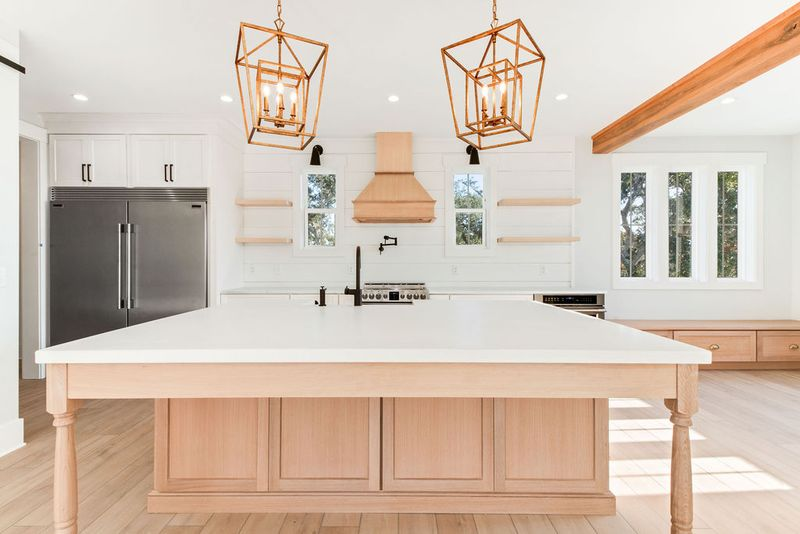
Cabinetry considerations that matter in coastal kitchens
• Durable box construction with quality joinery
• Finish systems that hold up to light, moisture, and cleaning
• Hardware selected for repeated use and long-term reliability
• Smart storage planning that reduces visual clutter
• Installation precision that ensures clean alignment over time
This is also where design restraint can be valuable. Coastal kitchens often benefit from clean lines, quieter detailing, and materials with enough depth to feel custom without becoming overly ornate. In many cases, durability and timelessness are closely connected.
Storage Strategy Is More Important Than Homeowners Expect
In open coastal homes, kitchens are usually visible from multiple rooms. That makes storage planning far more important than it might be in a more compartmentalized house. If the kitchen lacks sufficient storage, clutter becomes visible immediately, and the calm, refined quality of the home starts to break down.
Good storage is not about maximizing the number of cabinets at all costs. It is about understanding what needs to be stored, how often it is used, and where it should live in relation to the daily movement of the home.
For example, a kitchen designed for entertaining may need:
• easy-access serving storage near dining areas
• concealed appliance storage to keep counters clear
• pantry capacity for bulk goods and household overflow
• drawer organization near prep areas
• durable lower storage solutions in high-use zones
When storage is planned early, the kitchen feels more spacious because the visible surfaces remain clear. That visual calm is especially important in homes that prioritize open views, natural light, and connection to the outdoors.
Islands Should Do More Than Add Size
In many custom homes, the island becomes the visual centerpiece of the kitchen. But in coastal design, the island should be evaluated by its function as much as its scale.
A large island is not automatically better. The right island is one that supports prep work, conversation, serving, and circulation without overpowering the room. In some homes, an oversized island can make the kitchen feel heavy or limit movement. In others, it becomes the feature that successfully organizes the entire space.
The most successful islands tend to respond to the architecture of the home and the habits of the owners. Important questions include:
• Will the island be used mostly for seating, prep, or both?
• Does it improve or interrupt circulation to outdoor areas?
• Is there enough clearance around all sides?
• Does it support entertaining without compromising function?
• Is the material durable enough for everyday use?
In coastal homes, where kitchens often open to expansive great rooms, island proportions must also be visually balanced. The island should feel integrated into the room rather than dropped into the middle of it.
Material Selections Need to Balance Elegance and Performance
Coastal kitchens often call for a lighter, more relaxed visual language. Natural light tends to be stronger, views are more open, and the overall atmosphere of the home often leans toward warmth, ease, and understated refinement. But a relaxed visual tone should not be confused with casual construction standards.
Every material in the kitchen needs to be evaluated for both appearance and long-term use.
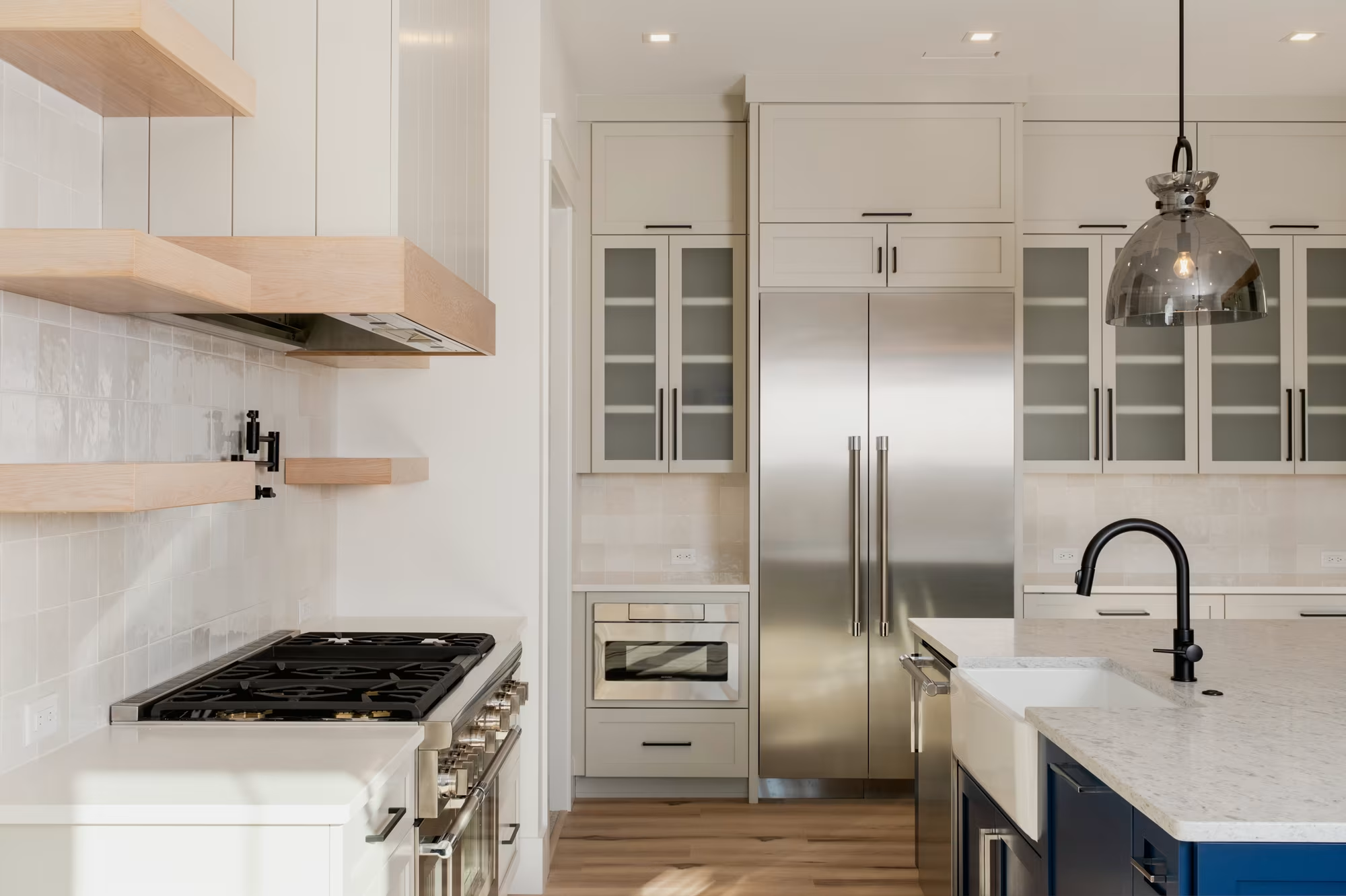
Countertops should be selected not only for color and pattern, but also for durability, maintenance requirements, and how they perform in a high-use environment. Flooring should connect visually to the rest of the home while also standing up to traffic, moisture, sand, and daily wear. Backsplash materials should add texture and depth without becoming too busy in an open-plan setting.
Common kitchen material priorities in coastal homes
Kitchen Element
What Matters Most
Countertops
Durability, maintenance needs, edge profile, visual calm
Flooring
Moisture tolerance, wear resistance, continuity with main living areas
Hardware
Corrosion resistance, tactile quality, and finish longevity
Cabinet finish
Cleanability, stability, and ability to age gracefully
Lighting materials
Resistance to coastal indoor humidity and timeless appearance
The strongest kitchens tend to use a measured palette. They feel intentional rather than overdesigned. In coastal homes, quiet material confidence often ages better than trend-driven selections.
Lighting Has to Support Both Function and Atmosphere
Lighting is another area where kitchen design can easily become superficial if approached only as decoration. In reality, kitchen lighting needs to solve several problems at once.
It must support prep work and cooking. It must provide a comfortable atmosphere for early mornings and evenings. It must connect visually with adjacent living spaces. And in many coastal homes, it must do all of that without competing with natural light during the day or with views after sunset.
For that reason, layered lighting is usually essential. A single category of fixture cannot do all the work.
A strong lighting approach often includes:
• ambient lighting for overall visibility
• task lighting for prep and cooking zones
• decorative fixtures that help define the island or dining connection
• under-cabinet lighting for precision and warmth
• dimming capability for flexibility throughout the day
What matters most is not the number of fixtures, but the coordination between them. The kitchen should feel bright when it needs to and relaxed when it should.
The Kitchen Must Belong to the Architecture of the Home
One of the clearest ways a custom kitchen can fall short is when it feels disconnected from the rest of the home. This often happens when kitchens are designed as isolated showpieces rather than as architectural spaces.
At Longshore, kitchens are considered part of the larger home composition. Ceiling treatment, window placement, trim profiles, flooring transitions, cabinetry lines, and sightlines into surrounding rooms all influence how natural the kitchen feels once it is built.
In a coastal custom home, this matters even more because the kitchen is often visible from key arrival points and from the main gathering areas of the house. It should feel as though it belongs exactly where it is. The proportions, detailing, and material palette should support the architecture rather than compete with it.
When this integration is done well, the kitchen feels calm and permanent. It does not rely on novelty to make an impression.
Practical Features Often Make the Biggest Difference in Daily Life
Some of the most valuable design decisions in a coastal kitchen are not dramatic. They are the quieter features that improve daily use in ways homeowners continue to appreciate years later.
These may include:
• a pantry placed exactly where unloading groceries feels easy
• durable flooring that handles sand and moisture without worry
• refrigeration and ice placement that supports entertaining
• concealed charging and workspace solutions
• easy transitions between kitchen, mudroom, laundry, or rear entry zones
These details matter because coastal living tends to bring the outdoors into the rhythm of daily life. People come in from porches, docks, pools, yards, and beach outings. A kitchen that acknowledges that reality feels more durable, more comfortable, and more livable.
A Well-Designed Coastal Kitchen Should Feel Effortless
The best kitchens rarely announce how much planning went into them. They simply feel right. Traffic flows naturally. Storage is where it should be. Materials hold up. The room feels open, but it still works hard. It supports entertaining without becoming chaotic. It feels refined without being fragile.
That kind of kitchen is not created by chasing trends or overloading the design with luxury features. It comes from understanding how the home will actually be used, how the coastal environment affects interior performance, and how architecture, construction, and daily living should support one another.
Longshore Perspective
In coastal custom homes, kitchen design is about much more than selecting finishes. It is about creating a room that supports movement, entertaining, comfort, and long-term durability within the broader context of the home. The most successful kitchens are not only beautiful on completion day. They continue to function gracefully as the years pass and the routines of daily life settle into the space.
Building Kitchens That Work for Coastal Living
A kitchen in coastal North Carolina should do more than look polished. It should reflect how homeowners actually live near the water. It should support gatherings, connect naturally to indoor and outdoor spaces, and remain durable in an environment shaped by humidity, salt air, and heavy daily use.
At Longshore Custom Homes, kitchen design is approached with that full picture in mind. Proportion, circulation, storage, ventilation, materials, and architectural integration all matter. When those decisions are made thoughtfully, the result is a kitchen that feels natural, performs quietly, and adds lasting value to the home as a whole.
Key Takeaway
A successful coastal kitchen is not defined by size or by a list of luxury finishes. It is defined by how well it supports daily life, how naturally it fits within the architecture of the home, and how effectively it performs in a humid coastal environment. Long-term quality comes from thoughtful layout planning, durable material choices, strong ventilation, and details that make the space both beautiful and highly functional.
Design a Kitchen That Truly Fits Coastal Living
If you are planning a custom home along the North Carolina coast, your kitchen deserves more than a standard layout and a finish package. At Longshore Custom Homes, kitchens are designed as part of a larger strategy for livability, durability, and architectural cohesion. Every decision is shaped by how the home will be used and how coastal conditions affect long-term performance.
If you are exploring a custom home in Wilmington or the surrounding coastal areas, Longshore Custom Homes can help you create a kitchen that feels refined, functions beautifully, and is built to support the way coastal living actually happens.