Waterfront property has a unique pull along the southeastern North Carolina coast. The combination of open water, shifting light, and the constant movement of tides creates an environment that feels both calming and alive. It is no surprise that many homeowners searching for custom homes in Hampstead are drawn to lots overlooking the Intracoastal Waterway, marshland views, or direct coastal frontage.
But building on waterfront land requires a level of structural planning that goes far beyond the visible architecture of the home.
The finished home may showcase wide porches, expansive glass, and relaxed coastal interiors, but beneath that appearance lies a series of structural decisions designed to protect the home from environmental forces that are stronger and more complex than those found inland.
Wind exposure, soil variability, salt air, flood elevation requirements, and moisture conditions all shape the engineering of a waterfront home long before the first framing wall is installed.
At Longshore Custom Homes, waterfront design always begins with understanding the site itself. The goal is not simply to place a house on a beautiful lot. The goal is to design a structure that responds intelligently to the land, the water, and the long-term environmental conditions that come with coastal living.
The Site Determines More Than the Architecture
Many homeowners initially think about the design of their home before considering the physical characteristics of the property. On waterfront sites, the opposite approach tends to produce better results.
Before architectural plans begin to take shape, a waterfront lot must be evaluated carefully. Soil composition, drainage behavior, elevation relative to flood zones, and exposure to prevailing winds all influence the design of the home.
Waterfront properties along the Hampstead coastline can vary dramatically from one parcel to the next. A lot overlooking marshland behaves very differently from a property directly facing open water. Even neighboring lots may require different structural approaches depending on soil conditions or elevation.
Several factors are typically evaluated early in the process:
• elevation relative to FEMA flood zones
• soil stability and bearing capacity
• drainage patterns across the site
• proximity to tidal water or marshland
• prevailing wind direction and exposure
• sunlight orientation throughout the day
These conditions often determine where the home should sit on the lot, how the foundation will be constructed, and how the structure should be oriented to maximize both durability and livability.
A waterfront home that ignores these realities may still look impressive on completion day, but it is unlikely to perform well over the long term.
Flood Elevation Influences the Entire Structural Strategy
One of the most important structural considerations in waterfront construction is elevation. Many waterfront properties fall within FEMA flood zones, which means homes must be built at or above specific base flood elevation levels.
This requirement shapes far more than the height of the finished floor. It influences:
• foundation design
• stair and entry configuration
• structural support systems
• garage placement
• mechanical equipment location
• outdoor living transitions
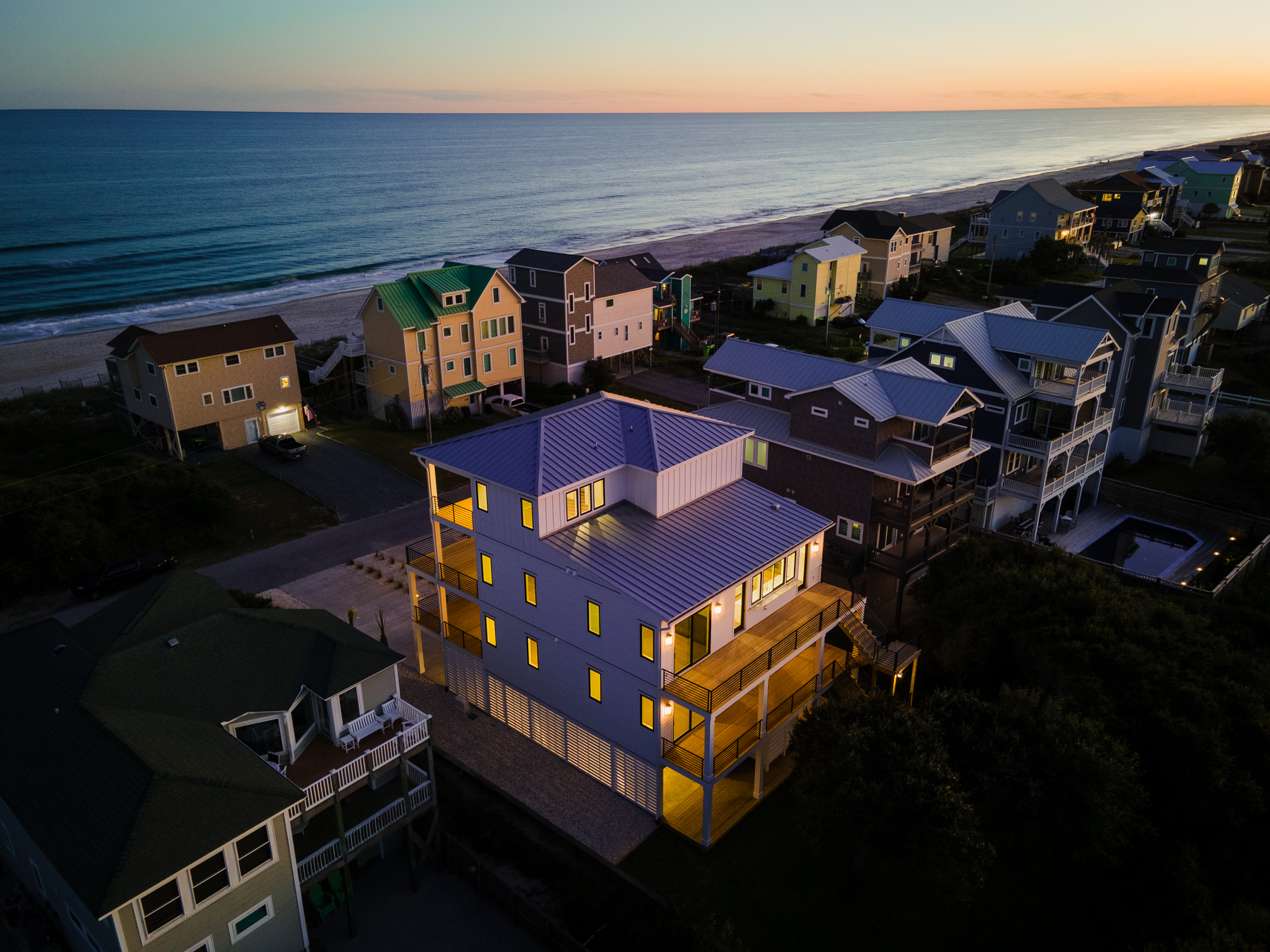
Elevated foundations are common in waterfront homes for this reason. By raising the living space above potential flood levels, the home gains an important layer of protection while also improving airflow beneath the structure.
That airflow can help reduce moisture accumulation and improve the longevity of framing components, particularly in humid coastal environments.
Why elevated foundations often perform better on waterfront lots:
• Increased flood protection — living areas remain above potential water levels
• Improved airflow beneath the home — reduces moisture accumulation
• Better long-term durability — framing materials stay drier
• Greater storm resilience — water can pass beneath without damaging living spaces
Elevation planning is not simply about meeting code requirements. It is about protecting the home and preserving the long-term integrity of the structure.
Soil Conditions Often Dictate Foundation Engineering
Waterfront properties frequently sit on soils that behave differently from those found inland. Sand, organic deposits, and areas of higher moisture content can influence how loads are distributed beneath a structure.
Before foundation work begins, soil conditions must be evaluated to determine how the home should be supported. In some areas, traditional slab foundations may not provide the stability required for waterfront construction.
Engineered foundation systems may involve:
• pilings driven deep into stable soil layers
• reinforced pier systems
• elevated beam foundations
• specialized drainage considerations
These structural systems are rarely visible once the home is complete, but they form the backbone of the entire building.
A properly engineered foundation ensures that the home remains stable even as environmental conditions shift over time.
Wind Exposure Requires Reinforced Structural Connections
Coastal winds create unique structural pressures on waterfront homes. Open exposure to water often means there are fewer natural wind barriers such as trees or neighboring buildings.
As a result, waterfront homes must be engineered to resist both uplift forces and lateral movement caused by strong coastal winds.
The structural framework of the home is typically reinforced with:
• hurricane ties connecting roof framing to walls
• engineered shear walls to resist lateral pressure
• metal connectors securing framing members
• specialized fastening schedules for roof decking
Although homeowners rarely see these components once construction is complete, they are some of the most important contributors to structural durability in coastal environments.
Waterfront Orientation Can Improve Both Comfort and Performance
The direction a home faces plays a major role in both energy performance and livability.
Along the North Carolina coast, orientation affects:
• sunlight exposure
• interior temperature regulation
• outdoor living comfort
• prevailing wind interaction with the structure
• long-term aging of exterior materials
A well-oriented home feels naturally comfortable even before mechanical systems begin regulating the indoor climate.
Managing Moisture Is Critical Near Water
Proximity to water increases humidity levels and exposes the structure to greater moisture pressure. This means the building envelope must be designed carefully to prevent long-term damage.
Waterfront homes rely on several layers of protection to manage moisture effectively:
• weather-resistant barriers behind exterior cladding
• proper flashing around windows and doors
• ventilated roof and attic assemblies
• drainage systems that move water away from the foundation
• corrosion-resistant fasteners and structural connectors
Exterior Materials Must Withstand Coastal Exposure
Material selection becomes an important part of the structural design process.
Key priorities for waterfront construction include:
• Structural fasteners — corrosion resistance in salt-air environments
• Exterior siding — durability against moisture and UV exposure
• Decking systems — resistance to weather, salt, and heavy use
• Windows and doors — impact resistance and strong sealing systems
• Roofing materials — high-wind installation and long-term durability
Choosing the right materials helps ensure the home continues to perform well long after construction is complete.
Outdoor Living Areas Must Be Structurally Integrated
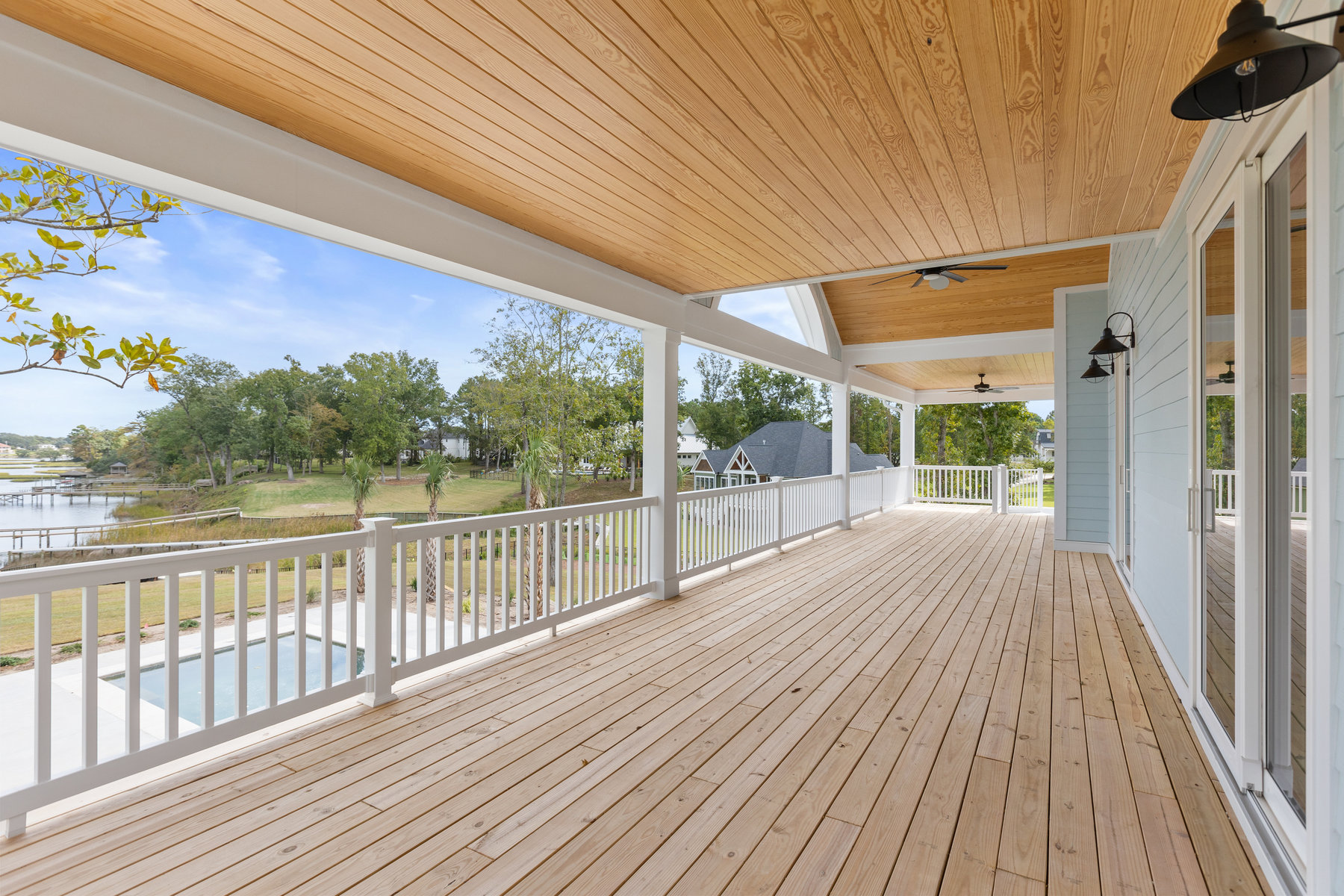
Waterfront homes often emphasize outdoor living just as much as interior space. Covered porches, outdoor kitchens, and expansive decks allow homeowners to enjoy coastal views and breezes throughout the year.
But these features must be structurally integrated into the home rather than added as decorative afterthoughts.
Deck framing, structural posts, and connections to the main structure must all be engineered carefully to withstand environmental exposure.
When outdoor living areas are built with the same level of structural discipline as the home itself, they become a seamless extension of the architecture rather than a maintenance challenge.
The Best Waterfront Homes Feel Effortless Because the Planning Was Thorough
A well-designed waterfront home does not reveal the complexity of its structural planning at first glance. It simply feels natural. The home sits comfortably on the site, the views feel intentional, the structure feels secure, and the interior spaces connect smoothly with the outdoors.
Achieving that level of simplicity requires thoughtful decisions early in the process.
Foundation systems, structural reinforcement, material selection, moisture control, and architectural orientation all play a role in shaping the final outcome.
Building Waterfront Homes That Last Along the Carolina Coast
Waterfront homes represent some of the most desirable properties in the Hampstead area, but they also demand greater care in design and construction.
When structural planning is approached with the right level of discipline, these homes can offer extraordinary comfort, durability, and connection to the coastal environment.
From foundation engineering and wind resistance to site orientation and moisture protection, every decision contributes to the long-term success of the home.
Key Takeaway
The beauty of a waterfront home often lies in what homeowners can see: open views, expansive windows, and relaxed coastal architecture. But the true strength of a waterfront home comes from the structural decisions hidden beneath the surface.
When site conditions, engineering, materials, and environmental exposure are considered carefully from the beginning, the result is a home that performs as beautifully as it looks.
Build a Waterfront Home with the Right Structural Foundation
If you are planning to build on a waterfront lot in Hampstead or the surrounding coastal areas, the most important decisions may be the ones made before construction ever begins. Site evaluation, elevation planning, foundation engineering, wind resistance, and moisture protection all shape how well a waterfront home will perform over time.
At Longshore Custom Homes, waterfront design starts with a clear understanding of coastal conditions and the structural discipline required to build with confidence near the water. If you are exploring a custom home on the Carolina coast, our team would be glad to talk through the early decisions that can protect your investment and help create a waterfront home built for lasting performance.