Understanding How Coastal Living Truly Shapes Outdoor Spaces
Outdoor living in Coastal North Carolina is not an accessory to the home. It is a central part of how people live, gather, and relax. The region’s climate allows homeowners to spend meaningful time outdoors throughout much of the year, from early morning coffee overlooking the marsh to evenings spent cooking, dining, and unwinding under changing skies.
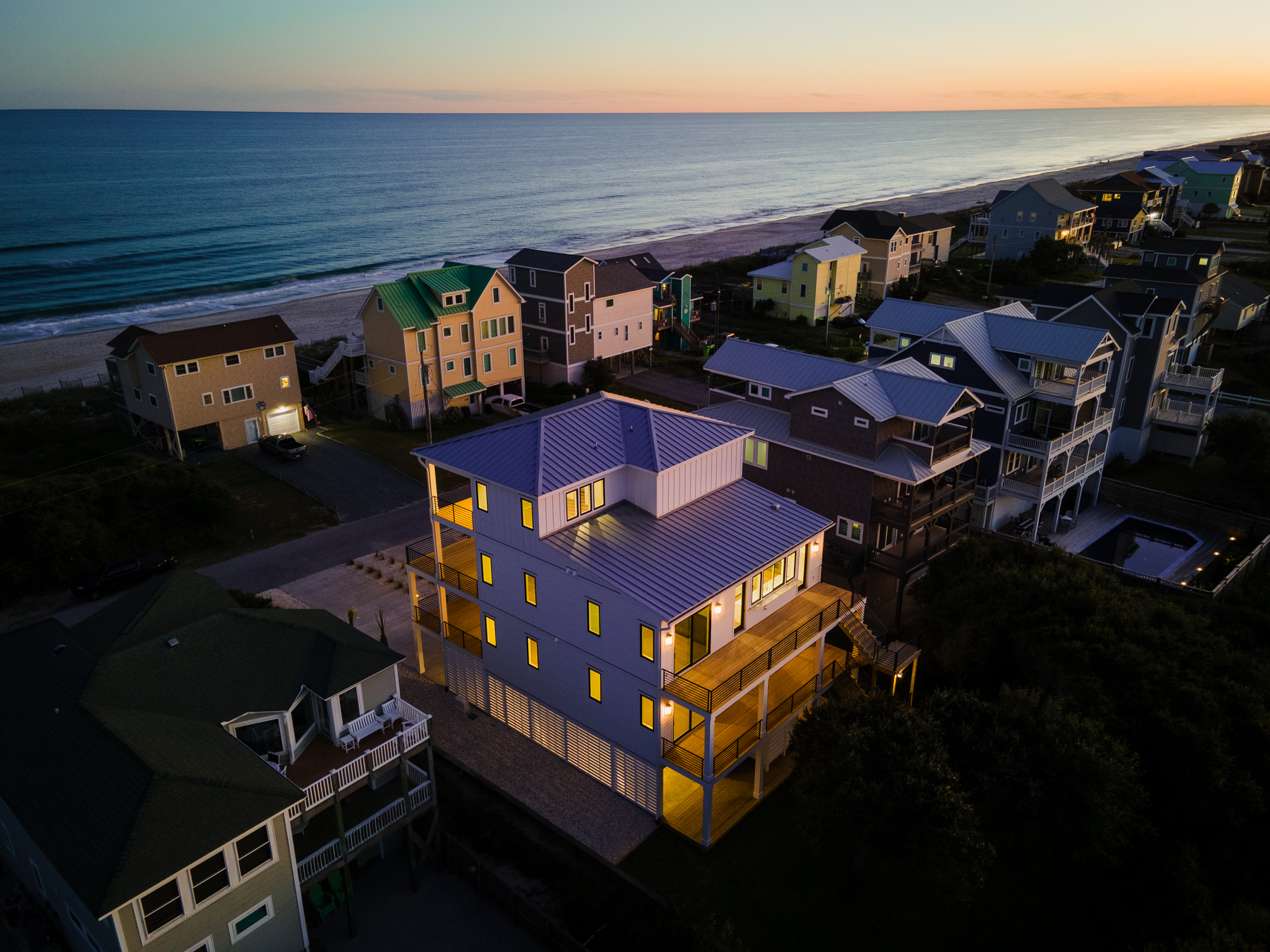
At Longshore Custom Homes, outdoor spaces are never treated as an afterthought. They are designed as an extension of the home’s architecture and daily rhythm. The goal is not simply to create usable exterior square footage, but to design outdoor environments that feel natural, comfortable, and durable within the coastal setting.
Coastal outdoor living must balance two realities. One is lifestyle: homeowners want spaces that support cooking, relaxing, entertaining, and enjoying views. The other is performance: salt air, humidity, shifting light conditions, and seasonal storms require materials and construction methods that work with the environment rather than against it. Every outdoor space must be both welcoming and resilient. That balance guides every design conversation at Longshore.

Creating a True Connection Between Indoors and Outdoors
The most successful coastal homes do not separate indoor and outdoor living. Instead, they create a sense of continuity where light, movement, and views flow naturally between spaces.
This begins with layout. Door placement, window sizing, ceiling heights, and transitional zones determine whether outdoor spaces feel intentional or disconnected. Large openings facing marshes, waterways, or natural landscapes often become defining features of the home. These openings invite daylight deep into the interior and allow prevailing breezes to move through primary living areas.
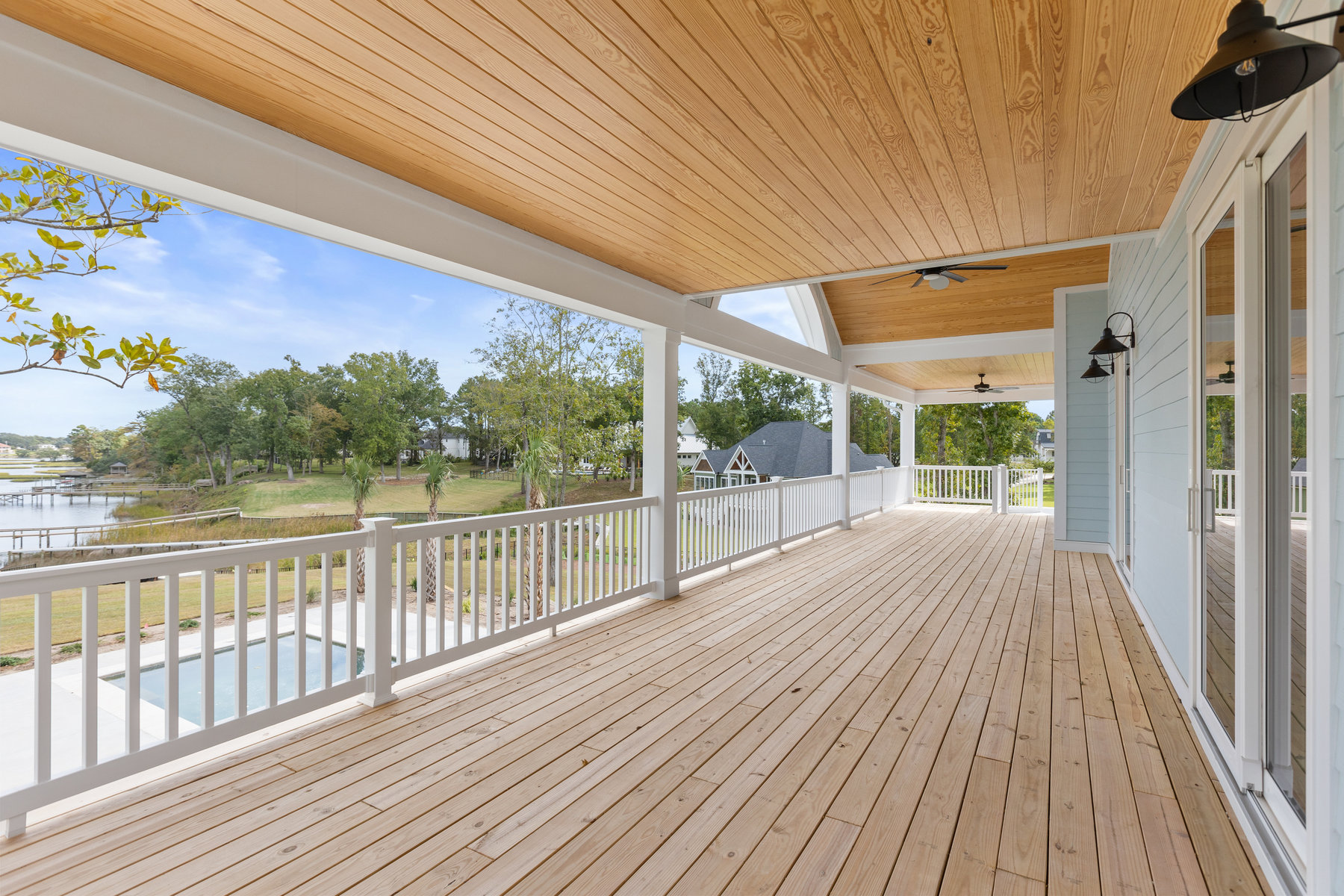
Longshore frequently designs covered patios, screened rooms, or raised decks directly adjacent to main living spaces and kitchens. This encourages daily use rather than limiting outdoor spaces to special occasions. When seating, dining, and cooking zones are positioned just beyond interior living areas, people naturally move between spaces without feeling like they are leaving the home.
Material transitions are equally important. Flooring selections often shift gradually from interior surfaces to exterior materials with compatible tones and textures. This visual continuity helps the outdoor space feel like a natural extension rather than a separate zone. Exterior ceilings, columns, and trim details are also coordinated with interior finishes so the transition feels calm and intentional.
Designing these connections early allows the home to feel cohesive rather than layered after the fact.
Designing Outdoor Living Zones That Support Real Life
Outdoor spaces function best when they are designed with purpose. Open decks or patios without defined uses often look generous but feel underutilized. Longshore approaches outdoor living by creating distinct but connected zones that reflect how homeowners actually live.
Outdoor kitchens are a common priority in Coastal North Carolina. These spaces allow families and guests to gather around food while keeping heat and activity outside the main interior spaces. A successful outdoor kitchen requires more than a grill. It involves thoughtful countertop placement for preparation and serving, protected storage for utensils, durable cabinetry materials, and appliances rated for exterior use.
Ventilation is also critical. Wind patterns near water can shift throughout the day. Kitchen placement must account for airflow so smoke and heat are managed naturally rather than trapped or redirected into seating areas.
Relaxation zones are designed with equal care. Comfortable seating, integrated lighting, and thoughtful orientation toward views create spaces that invite people to linger. Fire features are often incorporated to extend usability into cooler months, but their placement is carefully considered to avoid disrupting views or circulation.
Dining areas work best when they are close to the kitchen but visually distinct. Longshore often positions dining zones under partial cover to provide shade while maintaining openness. Lighting is layered to support evening meals without glare, allowing the space to feel intimate rather than overly illuminated.
A well-designed outdoor living environment typically includes:
- A primary activity zone such as a kitchen or grilling area
- A relaxation zone with comfortable seating and ambient lighting
- A transitional space that visually and physically connects indoors and outdoors
These zones allow the space to adapt naturally throughout the day and across seasons.
Selecting Materials That Perform in Coastal Conditions
Material selection is one of the most critical aspects of coastal outdoor design. Coastal North Carolina presents unique challenges that influence how materials age and perform.
Composite decking is often selected for its resistance to moisture, reduced maintenance requirements, and durability in humid environments. Modern composite materials offer realistic textures and tones that complement coastal architecture without the splintering or warping associated with traditional wood.
For patios and walkways, natural stone and high-quality pavers are commonly used. These materials handle moisture well, provide effective drainage, and remain comfortable underfoot even in warmer temperatures. Proper installation is essential to prevent movement or settling over time.
Structural elements such as railings, pergolas, and shade structures are frequently built using aluminum or fiberglass. These materials resist corrosion and maintain their appearance with minimal upkeep. When natural wood is selected for aesthetic reasons, it is done intentionally and paired with proper sealing, detailing, and maintenance planning.
Fabric selections also matter. Outdoor cushions, shades, and upholstery must be rated for UV exposure and moisture resistance. Quality fabrics retain color, resist mildew, and maintain their shape in coastal environments.
By selecting materials based on performance rather than trend alone, outdoor spaces remain functional and attractive for years to come.
Managing Sun, Shade, and Coastal Breezes
Comfort defines whether an outdoor space is truly usable. Coastal North Carolina offers abundant sun and pleasant breezes, but unmanaged exposure can quickly make a space uncomfortable.
Shade structures are often essential. Covered patios provide consistent protection from sun and rain. Pergolas offer filtered light and frame views while allowing airflow. Retractable screens and adjustable shading systems provide flexibility, allowing homeowners to respond to changing conditions throughout the day.
Longshore designs these elements in coordination with the home’s orientation and prevailing wind patterns. The goal is not to block the environment, but to work with it. Proper placement enhances comfort while preserving openness.
Lighting is planned with equal care. Integrated step lights, pathway lighting, and soft downlighting create a warm, inviting atmosphere after sunset. Rather than relying on a single light source, layered lighting allows outdoor spaces to transition naturally from day to night.
When sun, shade, and breeze are thoughtfully managed, outdoor living spaces remain comfortable across seasons.
Designing With Views and Natural Surroundings in Mind
Every coastal property offers a unique relationship to its surroundings. Some homes overlook marshlands, others face open water, and some capture changing light across wooded landscapes.
Outdoor living design begins by understanding these views. Raised decks may be positioned to capture long sightlines, while ground-level patios create a more private, sheltered experience. Screened rooms allow homeowners to enjoy views while remaining protected from insects during warmer months.
Longshore often begins this phase by walking the property with homeowners. Observing how light shifts throughout the day and how the landscape interacts with the home informs placement and orientation decisions that cannot be replicated on paper alone.
Landscaping supports these choices by framing views, softening edges, and enhancing privacy without isolating the home from its environment.

Thoughtful Use of Water and Fire Features
Water and fire elements add sensory depth to outdoor spaces when used intentionally. Water features introduce movement and sound, creating a calming backdrop without dominating the space. Fire features provide warmth and encourage gathering, extending outdoor use into cooler evenings.
Placement is key. Fire features positioned near deck edges draw attention outward, while water elements near seating areas add tranquility. When integrated early in the design, these features feel purposeful rather than decorative.
Bringing Outdoor Living Together Thoughtfully
Designing outdoor living spaces in Coastal North Carolina is not about adding features. It is about understanding how people live, how the environment behaves, and how architecture can support both.
At Longshore Custom Homes, outdoor living is designed alongside the home, not after it. Each decision reflects climate, material performance, and daily use. The result is an outdoor environment that feels natural, durable, and deeply connected to both the home and the coastal setting.
For homeowners planning a new build or major renovation, outdoor living often becomes one of the most valued aspects of the home. When guided by experience and respect for the coastal environment, these spaces become places where everyday life unfolds comfortably and naturally.